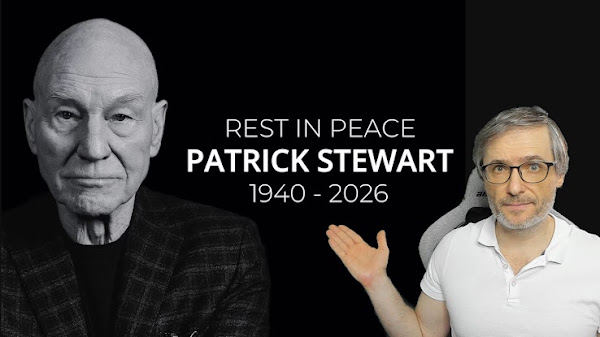
Interesting new developments everyone should know!
Starship V3 rocket by SpaceX
0:30 Ignition
0:40 Modern rocket launch
3:04 Separation
Civilization 6 rocket launch
0:01 Rocket launch
0:06 Accelerating
Building a city on the Moon
0:43 If you get sick or injured on the moon, you can come home
0:48 The journey to Mars is a one-way trip
1:23 Tesla mission: To build a world of amazing abundance
1:51 xAi owns x.com
3:04 Mass driver aka Rail gun
3:43 11.2 km/s Earth escape velocity (~40,000 km/h)
3:48 2.38 km/s Moon escape velocity (~8,600 km/h)
4:28 Who will build all this crazy stuff on the moon?
4:36 Robots will build the infrastructure on the moon
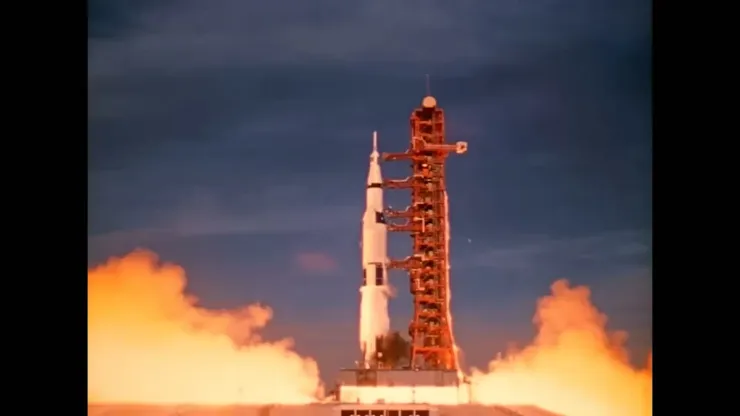
5:00 Saturn 5 moon rocket launch
5:33 Von Neumann probe: Make a spacecraft to explore the galaxy over millions of years
Earth moves at 30 km/s
1:10 Earth is constantly moving at 30 km/s in its orbit around the Sun
Farming to not farming
16:30 80% of us were farmers 150 years ago, now 3% are and we feed the world
18:02 Luddites rioted against the industrial revolution in early 1800s
Starlink has an infrastructure monopoly
3:15 Starlink satelites shoot lasers through the vacuum of space
3:27 For short distances, fiber is faster than Starlink
3:33 Starlink is faster than fiber for long distances
4:10 Russia invaded Ukraine and severed communication infrastructure in Ukraine
4:53 Ukraine's ground network was cyberattacked on Day 1 of Russia's invasion
7:44 Ad start
8:21 Skip ad
10:22 Starlink has a cost and scale advantage
Fastest object ever built
1:38 Parker Solar Probe is the fastest object ever built by humans
1:43 Uses a physics cheat code using the gravity well of Venus to accelerate
1:53 635,000 km/h
Spaceflight today
9:00 SpaceX caught the world's largest flying object, the booster
9:10 Catching the booster with giant chopsticks
9:27 Approaching launchpad
10:04 Catching the booster in the launch tower
10:12 Final stage
11:11 The booster can be reflown within 1 hour of landing
28:34 If you go to the nearest star Alpha Centauri it would take 70,000 years with our most powerful rocket
5:50 When military regulations required $2M cranes, SpaceX got them revised to $300,000
6:00 A $3M cooling system became $6,000 with home AC unit
Why colonize Mars?
8:15 Goal: make life multiplanatery and preserve the light of human consciousness
9:42 Why Mars? No other options
2:12 We don't want to be one of those lame 1-planet civilizations
3:09 We are not abandoning Earth
3:47 Launch Starship
Mars or Titan?
0:38 Mars takes 9 months to reach, Titan 4 years
3:27 Titan is a gas station the size of a small planet
1:11 Mars lost its magnetic field billions of years ago
1:35 Mars gets 450 times more radiation than on Earth
2:19 Martian soil is loaded with toxic chemicals called perchlorates
0:20 Saturn's moon Titan has lakes of gasoline, literal rocket fuel sitting in oceans
0:27 Atmosphere is thick, protection from radiation
2:46 Titan is cold, -179°C, colder than anywhere on Earth
Apollo 15 operations on the Lunar surface
0:00 Feather and hammer dropped on the moon
0:37 Drop them!
Universe size comparison (diameters)
1:01 Earth – You are here
1:34 Saturn
2:05 Sun
Doing the impossible
9:00 We're builders - We've done the impossible before - People said that reusable rockets were impossible
22:37 Electromagnetic mass driver on the moon
22:52 You can create a petawatt of computer and send it to deep space
22:58 Moon has no atmostphere and one sixth of Earth's gravity
23:02 You don't need rockets on the moon
23:33 I want to live long enough to see the mass driver on the moon
25:49 Any need you possibly want can be met
25:52 If you can think of it, you can have it
AI in space
2:51 xAI raised $20B Series-E round
3:48 Starlink has 9,400 satellites offering Internet globally
3:53 That's the cash cow for SpaceX
4:21 Tesla owners can go coast-to-coast without touching the steering wheel
5:21 Compute is the weakness: AI chips
7:29 Elon said something important at Davos
7:35 The lowest cost place to put AI is space in 2-3 years
9:17 Send AI computers to space powered by the sun
9:40 Constant solar power in sun-synchronous orbit
10:32 NIMBY Not in my back yard
11:07 Starlink v3 satellites
11:32 Starship can launch 60 v3 satellites per mission
11:42 6,000 compute-enabled satellites per year
12:28 You have a company that owns the infrastructure the AI race runs on
13:34 CFIUS Committee on Foreign Investment in United States
14:09 Warren Buffet built Berkshire by combining insurance float
16:12 Tesla Model S and X production ends in mid-2026
16:35 Making 2M cars pivots to robots
17:16 farzad.fm is my community
Elon
4:36 There will be more robots than people
6:58 All cells in your body age at the same rate
23:41 5 years from now AI will be smarter than all of humanity collectively
24:55 I want to make science fiction not fiction forever
25:09 Star Trek for real
25:38 I would like to understand the meaning of life
26:52 Do you want to die on Mars? Yes, just not on impact
27:53 Better to err on the side of being an optimist and be wrong rather than a pessimist and be right
Peace through conflict
9:39 Peace cannot be achieved without suppression of the people
10:03 Do you want a world with no conflict?
10:06 How do you achieve a world with no conflict without some oppression?
10:12 A world with some conflict is the balance to minimize suppression
Black holes
28:19 There is a black hole at the center of every galaxy
Mirrored buildings
5:12 Maraya Concert Hall is the largest mirrored building in the world
Business
23:59 A business is a system that adds value even when you are not there
Math
cos and sin
1:28 (cosθ, sinθ) are the (x, y) coordinates of the intersection of a ray at angle θ with the unit circle
A unit circle is a circle of radius 1 centered at the origin.
pwned
"owned" mis-spelling
Typo for "owned", "Pwned" (pronounced "poned") is internet slang meaning to be totally dominated, defeated, or owned, originating in online gaming but now also meaning a system or account has been hacked or compromised. It signifies complete control or a humiliating defeat, often used to gloat after winning a game or to describe a security breach, like an email getting "pwned" in a data leak.
Microsoft paid $3M for Start Me Up song by Rolling Stones for Windows 95 commercial
Microsoft paid ~$3 million to use The Rolling Stones' Start Me Up for the launch of Windows 95 in 1995. This was the first time the band had licensed one of its songs for a commercial advertisement, and the deal was a perfect fit for the campaign, which featured the new "Start" button in Windows 95.
The campaign was a major marketing event that helped make Microsoft a household name.
YouTube began as a dating website
"Tune In, Hook Up" was the YouTube slogan when it first started on Feb 14 2005.
YouTube was an online dating site that ultimately failed but was a great video streaming and uploading platform. They dropped the dating aspect and pivoted to a site for anyone to upload and view streaming videos in web browsers. The first YouTube video Me at the zoo uploaded on April 23, 2005 shows co-founder Jawed Karim at the San Diego Zoo.
"Your Digital Video Repository" became YouTube's slogan in June 2005.
YouTube began as an angel-funded enterprise working from a makeshift office in a garage. In November 2005, venture firm Sequoia Capital invested an initial $3.5 million. In April 2006, Sequoia and Artis Capital Management invested an additional $8 million, which had experienced significant growth in its first few months.
"Broadcast yourself. Watch and share your videos worldwide!" became YouTube's slogan in December 2005, which later become just "Broadcast yourself".
Why did Fullscreen shut down as a YouTube MCN?
The MCN ceased operations on Oct 31 2021.
Its overall business strategy shifted away from a YouTube-centric model towards becoming a digital-first media company.
The MCN model became less profitable, and Fullscreen focused on other ventures like brand-funded content and its own streaming service, which it eventually shut down as well to better focus on its creator and brand services under its parent company.
Fullscreen shut down its paid platform for creators
Fullscreen already tried making a paid monthly subscription creator platform and failed.
See bbc.com/news/technology-42024075
I don't see any other pay-per-view or subscription-based creator platform succeeding.
When Fullscreen decided to abandon their paid platform for creators, they claimed they had hundreds of thousands of monthly subscribers which all went to $0 when they shut it down.
Even those creators who had a community following and supporting them on Fullscreen's platform lost all that income when Fullscreen shut it down.
Sadly, if the platform fails, everyone fails along with it.
Animals
1:50 Gecko eats a cricket
Source h.ki/cricket-pen
Mark Cuban left Shark Tank after 14 years
0:21 Why was now the right time to check out of Dodge?
0:35 It was time, my kids are teenagers, I don't want to miss them growing up and leaving the house
Does a baby in the womb breathe like a fish in water?
No, babies do not breathe like fish in the womb. While they are surrounded by liquid and do make "breathing" motions, they do not use their lungs to take in oxygen from the amniotic fluid the way fish use gills to extract oxygen from water
Here is how a baby actually receives oxygen and "breathes" before birth:
- Oxygen via Placenta: The baby receives oxygenated blood from the birthing parent through the placenta and umbilical cord
- Practice Breathing: By 10–12 weeks of gestation, a fetus begins "practice" breathing by taking amniotic fluid into their lungs. This helps develop the muscles and diaphragm, but it does not provide oxygen to the body
- Fluid-Filled Lungs: Because the baby’s lungs are already filled with fluid, they cannot drown in the womb
- First Breath: Real breathing begins only after birth when the baby enters the world, the umbilical cord is cut, and the lungs fill with air for the first time
While they appear to be moving their chests in utero, they are simply training for life after birth, not extracting oxygen from the fluid
When a baby is born, how does all the fluid drain from its lungs?
The transition from a fluid-filled environment in the womb to breathing air is one of the most complex physiological shifts a human ever undergoes. In the uterus, a fetus's lungs are filled with a specialized alveolar fluid that helps them grow and develop, but this must be cleared almost instantly at birth.
The drainage happens through a combination of physical pressure, chemical signaling, and rapid absorption.
1. The Physical "Squeeze"
As a baby passes through the birth canal during a vaginal delivery, the chest is physically compressed. This is often referred to as the "thoracic squeeze." This pressure mechanically forces a significant portion of the fluid out of the mouth and nose.
2. The Sodium Pump Switch
Hours before labor even begins, the baby's body starts preparing. Hormonal shifts (specifically increases in adrenaline and cortisol) signal the lungs to stop producing fluid and start absorbing it.
- Cells in the lungs activate sodium channels
- These channels begin pumping sodium out of the air sacs (alveoli) and into the surrounding tissue
- Water follows the sodium through osmosis, moving out of the air spaces and into the lung tissue
3. The First Breath
The most dramatic clearance happens with the very first cry. When a baby takes that sharp, deep initial breath, it creates high internal pressure. This pressure pushes the remaining fluid across the alveolar membranes and into the interstitial space (the area between cells).
4. Capillary and Lymphatic Absorption
Once the fluid has been pushed out of the air sacs and into the surrounding tissue, it is cleared by two systems:
- The Circulatory System: The majority of the fluid is absorbed directly into the pulmonary capillaries (small blood vessels)
- The Lymphatic System: The remaining fluid is drained away by the lymphatic vessels over the first few hours of life
What happens in a C-section?
Because babies born via Cesarean section do not experience the "thoracic squeeze" of the birth canal, they often have more fluid remaining in their lungs at birth. This can sometimes lead to a condition called Transient Tachypnea of the Newborn (TTN), or "wet lungs," where the baby breathes rapidly for a day or two while the body finishes absorbing that extra liquid.
How did Elon buy x.com
Elon Musk's acquisition of x.com is a story of long-term obsession, spanning over 25 years. Because single-letter .com domains are no longer issued and are incredibly rare (only three are currently active: x.com, q.com, and z.com), he had to acquire it twice.
1. The First Acquisition (1999)
In early 1999, after selling his first company, Zip2, Musk invested roughly $12 million to start an online bank.
- The Original Owners: The domain was owned by two tech professionals, Marcel DePaolis and Dave Weinstein.
- The Deal: Musk initially offered nearly $1 million in cash, but they refused. They eventually agreed to sell the domain in exchange for 1.5 million shares of Series A stock in the new company. Musk famously called them "bastards" for insisting on equity, though that equity became worth a fortune after the company became PayPal.
2. The PayPal Years (2000–2017)
- The Merger: In 2000, x.com merged with Peter Thiel's company, Confinity, which owned the PayPal product.
- The Loss: Musk wanted the entire merged company to be named X, but a boardroom coup ousted him as CEO while he was on his honeymoon. The company was officially renamed PayPal in 2001, and the x.com domain was largely mothballed or redirected to PayPal for the next 16 years.
3. The Buyback (2017)
In July 2017, Musk bought the domain back from PayPal.
- Sentimental Value: Musk tweeted that he bought it because it had "great sentimental value" to him.
- The Price: The exact price was never disclosed, but industry experts estimate he paid between $5 million and $10 million. For comparison, the domain z.com sold for $6.8 million in 2014, and Musk had previously paid $11 million for tesla.com.
- The Usage: For years, the site was almost entirely blank, sometimes only displaying a single "x" in the corner, until it became the official home of Twitter following the 2023 rebrand.
Why are single-letter domains so rare?
The IANA (Internet Assigned Numbers Authority) stopped allowing the registration of single-letter domains in 1993 to prevent a "land grab" of the most valuable real estate on the web. The only ones that exist today were registered before that rule went into effect, making them some of the most expensive and sought-after assets in digital history.
Source https://gemini.google.com/share/e47e4aa2f7da
Why did lumberyard game engine fail
The failure of the Amazon Lumberyard game engine is a textbook case of how unlimited financial backing and massive cloud infrastructure cannot substitute for structural usability and community trust.
When Amazon bought the rights to CryTek’s CryEngine for $50–70 million in 2015, they had grand ambitions
- Build a free, AAA-capable engine
- Funnel developers directly into the Amazon Web Services (AWS) ecosystem and Twitch integration
Instead, Lumberyard became an internal bottleneck for Amazon Game Studios and a ghost town for external developers, before ultimately being killed off and handed over to the Linux Foundation as the open-source Open 3D Engine (O3DE) in 2021.
Several critical flaws led to its downfall.
1. Wrong foundation (CryEngine tax)
Choosing CryEngine as a bedrock was a fundamental architectural mistake. While CryEngine was legendary for its bleeding-edge graphical capabilities (e.g., Crysis), it was historically notorious in the industry for having an incredibly convoluted codebase, terrible documentation, and an workflow tailored almost exclusively for single-player, sandbox first-person shooters.
Amazon wanted to build massive multiplayer online games (MMOs) like New World and session-based competitive multiplayer games like Crucible and Breakaway. Trying to twist a single-player FPS engine into a massive networking architecture was, as one anonymous Amazon developer famously put it, "like driving a train while the tracks were still being laid."
2. Overwhelming technical debt
Instead of cleaning up CryEngine, Amazon’s strategy was to add onto it. They bolted on technology from their acquisition of DoubleHelix, added custom AWS networking layers, and layered their own proprietary code on top.
This resulted in a frankensteinian, fragmented architecture. According to Karl Berg, one of the engineers who later oversaw the transition to O3DE, Lumberyard was essentially "three engines smooshed into one." When the team finally stripped the code to make it open-source, they had to remove millions of lines of redundant, vestigial, and dead code that developers had been actively fighting against for years.
3. Horrible workflow and tooling
For everyday game developers, the engine was a nightmare to use
- Sluggish Performance: Basic tasks like compiling code or processing art assets were brutally slow. Developers joked about watching entire movies while waiting for the engine to bake a build.
- The "EBus" System: Amazon introduced an Event Bus (EBus) communication system to handle component management. While mathematically organized, it made simple tasks—like getting a basic reference to another component on a game object—unnecessarily complex and abstract compared to the intuitive component workflows of Unity or Unreal.
- Gutted Features without Replacements: At one point, Amazon decided to remove a legacy scripting language inherited from CryEngine to clear out technical debt. However, they deprecated the old language before the new alternative was fully production-ready or documented, leaving early adopters entirely stranded with broken tutorials and zero learning materials.
4. Zero community adoption
Game engines survive on their ecosystem. Unity and Unreal succeeded because they built vast asset stores, comprehensive documentation, and active forums where a lone developer could find an answer to any bug.
Lumberyard had virtually no external community. Because it was so hard to use, independent developers avoided it. Because indies avoided it, there were no third-party tutorials, plugins, or community support hubs. If you hit a bizarre engine bug in Lumberyard, you were entirely on your own.
5. Corporate misalignment and AWS imperialism
At its core, Lumberyard wasn't created by game developers out of a passion for game development; it was created by an e-commerce and cloud infrastructure giant to drive server revenue. The engine was free, but the catch was its restrictive license: if you wanted to use cloud features for your multiplayer game, you were legally mandated to use AWS. You couldn't use Google Cloud or Microsoft Azure.
This obvious cash-grab made external studios skeptical. Furthermore, Amazon's top-down management style, high-profile staff turnover, and lack of foundational gaming experience meant that the engine's development was guided by corporate KPIs rather than the practical needs of game creators.
Aftermath
The engine’s internal track record speaks for itself. Breakaway was cancelled. Crucible launched and was so poorly received it was un-launched back into beta, then cancelled entirely. New World survived to release, but its development was plagued by massive engine-related delays and optimization struggles.
Realizing that Lumberyard was a sinking ship that could no longer compete with Epic Games' Unreal Engine or Unity, Amazon cut their losses in 2021, stripped the legacy code, and donated the remaining framework to the open-source community under the Apache 2.0 license, ending the era of Amazon's proprietary engine ambitions.
Source https://gemini.google.com/share/a3668e86d45a
Car companies make no money on new car sales
0:00 Start
0:26 Car companies make no money on new car sales
0:29 All their profit comes for selling parts to the existing fleet of cars sold in the past
0:44 This creates a massive barrier to entry for any new car company without an existing fleet
Same as Gillette razers vs blades: they sell razers for no profit, all profit comes from parts (blades)
Why women cover their face with a burqa
0:04 Why do you cover your face like that?
0:22 I believe covering your face is part of dressing modestly to avoid attraction when you go out
0:47 Is there a danger that males in the audience are attracted to every female's face here
0:59 It could stir passions
1:03 Why would it not stir passions in a woman to see a man's face
1:12 It's about burqa, about the women wearing the viel
1:21 If it's about equality, why should not men not be required to cover their faces, too?
1:34 It's a good point, but I wouldn't question that
Who is Cain to Abel?
1:40 I'm a colt in your stable, I'm what Cain was to Abel [Blaze of Glory] [Bon Jovi]
Source h.ki/blaze-of-glory-bon-jovi#mo1tl1127
Cain is the older brother of Abel and the firstborn son of Adam and Eve in the Bible's Book of Genesis. He is a farmer who kills his younger brother, a shepherd, out of jealousy after God accepts Abel's offering but rejects his own, making Cain the world's first murderer.
Source google.com/search?q=who+is+cain+to+abel
Forest City in Malaysia
3:18 Forest City in Malaysia looks abandoned
Source https://share.gemini.google/wtuVuhgC5JeL
Building the Burj Al Arab
0:38 Sheikh Mohammed wanted one building the world would know before they knew Dubai